Pain on the thumb side of the wrist can make surprisingly simple tasks difficult. Opening a jar, lifting a baby, turning a key, or using a phone can all become uncomfortable. One possible cause is De Quervain’s tenosynovitis, a condition affecting two of the tendons that move the thumb.
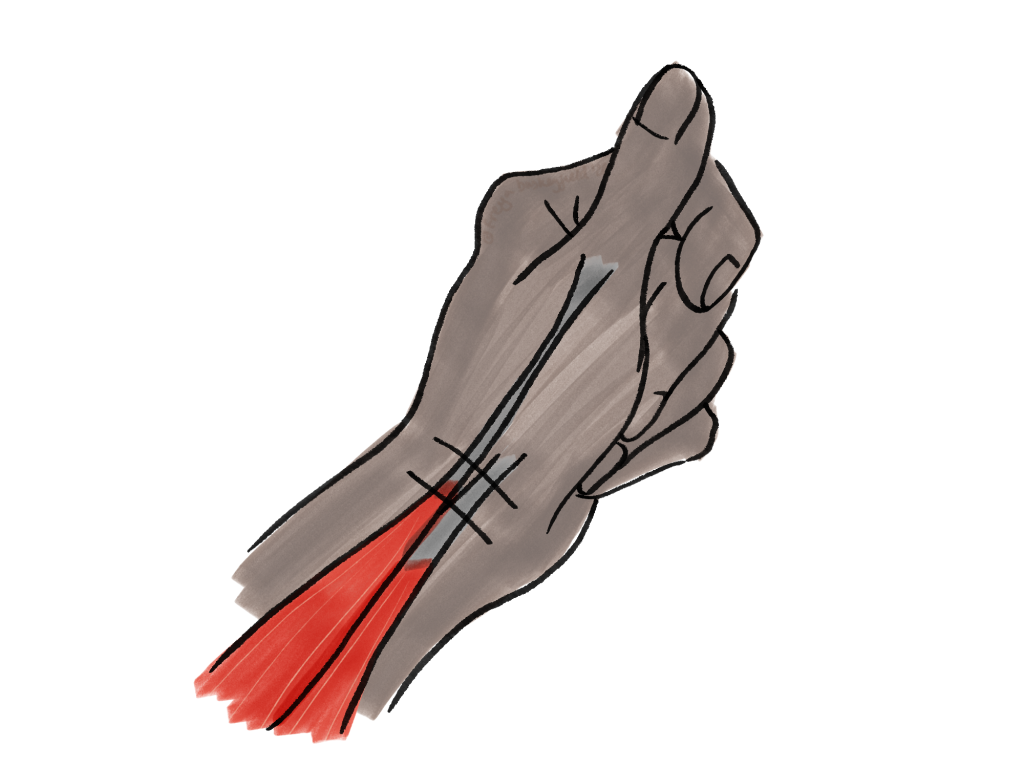
It is particularly common in new parents, but can affect anyone whose work, hobbies, or sporting activities place repetitive demands on the thumb and wrist.
What Is De Quervain’s Tenosynovitis?
Two tendons run from the muscles of the forearm towards the thumb. They pass through a narrow tunnel at the wrist, allowing them to glide as the thumb moves.
With De Quervain’s tenosynovitis, the tendons and the surrounding sheath become irritated and thickened. This reduces the space available for the tendons to move freely, producing pain on thumb or wrist movement.
Despite the name, inflammation is not necessarily the main process involved. Changes to the tendon sheath and repeated mechanical loading appear to play an important role.
Symptoms of De Quervain’s
Symptoms usually develop gradually, although they can appear relatively quickly following a change in activity.
You may notice:
- pain over the thumb side of the wrist
- tenderness at the base of the thumb
- pain when gripping or pinching
- difficulty lifting objects
- discomfort when wringing or twisting
- swelling around the wrist
- a clicking or catching sensation when moving the thumb
New parents are particularly susceptible because repeatedly lifting a baby places considerable demand on the thumb and wrist. The way you hold the baby can make a difference too, particularly if the wrist is repeatedly held in an awkward position. Keeping your hand in a more neutral position can help.
What Causes Tenosynovitis?
There isn’t always one obvious cause. Repetitive movements are an important factor, but the capacity of the tendon to tolerate that load matters too.
A sudden increase in activity can therefore be enough to trigger symptoms. This might happen when starting a new sport, increasing gym training, taking up gardening, or changing your work duties.
Previous wrist injuries, reduced movement elsewhere in the arm, and poor control of the thumb can also influence how much demand is placed on these tendons.
Could It Be Something Else?
Not all pain around the thumb is De Quervain’s tenosynovitis.
Similar symptoms can occur with osteoarthritis at the base of the thumb, wrist sprains, tendon injuries, ganglion cysts, and irritation of nearby nerves. A careful assessment is therefore important, particularly if symptoms followed a significant injury.
Avin will assess the painful area alongside the rest of the upper limb to establish which structures are likely to be involved.
How Can Osteopathy Help with De Quervain’s Tenosynovitis?
Osteopaths look at the body as a whole, so before treatment, Avin will assess beyond the wrist. Maybe there’s a problem in the shoulder or upper back that has influenced the wrist and placed the final straw of demand upon it. He will take these factors into account when developing your management plan.
Treatment may involve gentle techniques to improve movement and reduce tension around the wrist and forearm, alongside exercises to gradually rebuild strength and tendon capacity. Alongside improving resilience, it’s important to reduce the aggravating factors. Some movements can’t be avoided, but making changes to reduce the impact will promote quicker healing.
Most cases can be managed conservatively, although recovery can take time. Earlier intervention generally leads to better outcomes.
Make an appointment with Avin for an assessment and treatment in Leicestershire or Rutland.