Few symptoms are as alarming as suddenly noticing one side of your face isn’t working properly. Perhaps you’ve looked in the mirror and realised your smile appears uneven. Maybe drinking from a cup feels awkward, or you’ve noticed difficulty closing one eye. For many people, the immediate fear is that they may be having a stroke.
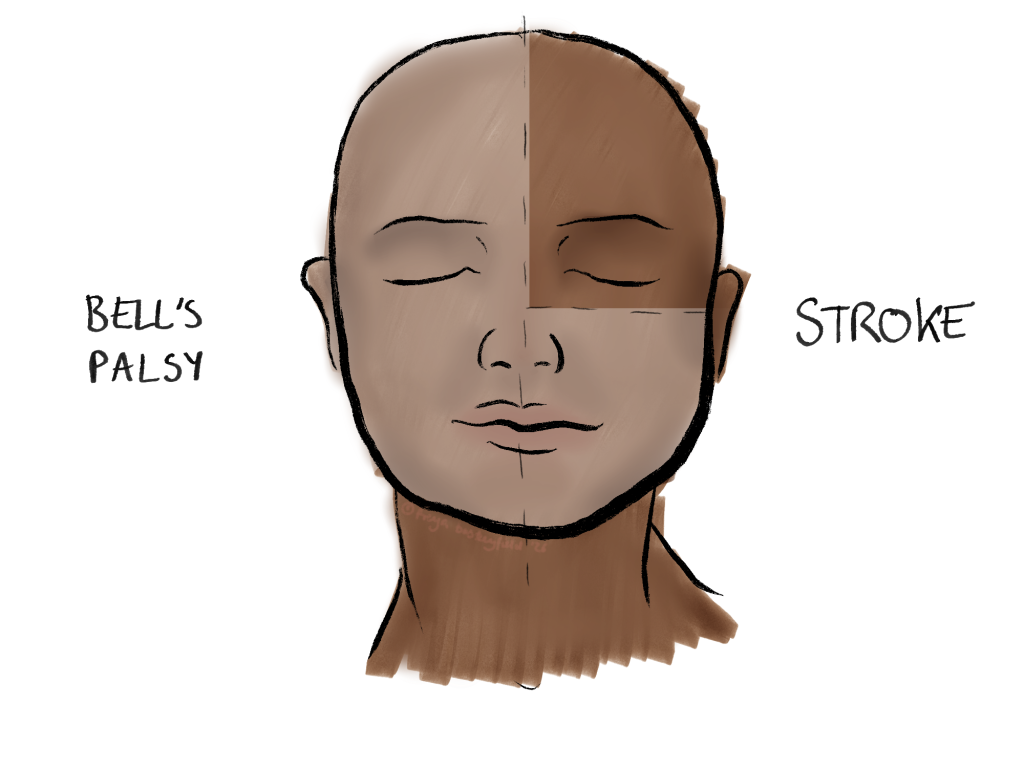
Sometimes that concern is justified. In other cases, the cause is a condition called Bell’s Palsy. The challenge is that both can affect the face, and at first glance they can look surprisingly similar.
The most important thing to understand is that new facial weakness should always be treated as a medical emergency until proven otherwise.
What Is a Stroke?
A stroke occurs when part of the brain loses its blood supply. Without oxygen, brain cells can quickly become damaged, leading to symptoms that depend on which area of the brain is affected. Facial weakness is one possible sign, but strokes often affect more than just the face. People may also experience weakness in an arm or leg, difficulty speaking, confusion, dizziness, visual changes or problems with balance.
Because stroke treatment is extremely time-sensitive, urgent medical assessment is essential. The sooner treatment begins, the better the chances of reducing long-term disability.This is why healthcare professionals often use the FAST campaign. If you notice:
Facial drooping, Arm weakness or Speech difficulties, it is Time to call emergency services immediately.
What Is Bell’s Palsy?
Bell’s Palsy is a condition affecting the facial nerve, which controls the muscles responsible for facial expression. Unlike a stroke, the problem occurs outside the brain. The nerve becomes irritated or inflamed, causing weakness on one side of the face. Although the exact cause is not always clear, viral infections are thought to play a role in some cases.
Symptoms often appear quite suddenly, sometimes developing over just a few hours. One side of the face may droop, the eye may not close fully, and smiling can become difficult. Some people also notice changes in taste, increased sensitivity to sound, or discomfort around the ear and jaw. Despite how dramatic the symptoms can look, Bell’s Palsy is not usually life-threatening. Most people make a good recovery, although the timescale varies considerably between individuals.
How Can You Tell The Difference?
The distinction can sometimes be surprisingly subtle, which is why self-diagnosis is not recommended. One clue lies in the forehead. Bell’s Palsy often affects the entire side of the face, including the forehead muscles, making it difficult to raise the eyebrow or wrinkle the forehead. In many strokes, forehead movement is partially preserved because the muscles receive signals from both sides of the brain.
However, medicine is rarely so straightforward! Not every stroke follows the classic pattern, and not every case of Bell’s Palsy presents identically. For that reason, healthcare professionals do not rely on a single sign.
Seek Help Immediately
Any new facial weakness should be assessed urgently, even if you suspect Bell’s Palsy may be the cause. It is far safer to rule out a stroke than to assume symptoms are harmless and delay treatment. You would not be wasting anyone’s time to get it checked out.
Once serious causes have been excluded and an appropriate diagnosis has been made, treatment can begin. Depending on the cause, this may involve medication, advice regarding eye protection, rehabilitation exercises or further medical investigations.
What Does This Mean For Osteopathy?
Facial weakness is not something an osteopath should attempt to diagnose or treat without appropriate medical assessment first. In fact, recognising symptoms that require urgent referral is an important part of healthcare practice. If a patient presents with signs suggestive of stroke or another neurological condition, immediate medical attention takes priority over treatment.
At the same time, not every symptom affecting the head, face or neck is neurological in origin. Jaw pain, headaches, neck stiffness and muscular tension can all create symptoms that worry patients, which is why a thorough assessment is so important.
If you are experiencing facial weakness, seek urgent medical advice immediately. If you have ongoing neck pain, headaches or musculoskeletal concerns after appropriate medical assessment, we would be happy to discuss whether osteopathic treatment may be able to help.
Click here to book an appointment in Leicestershire or Rutland