
If you’ve ever had osteopathic treatment before, you may have experienced a technique that produces a clicking or popping sound. Some people actively seek it out because they enjoy the feeling afterwards, while others are less keen on the idea. Either way, it’s important to know that joint manipulation is only one of many techniques available, and it is never something that has to be included in your treatment.
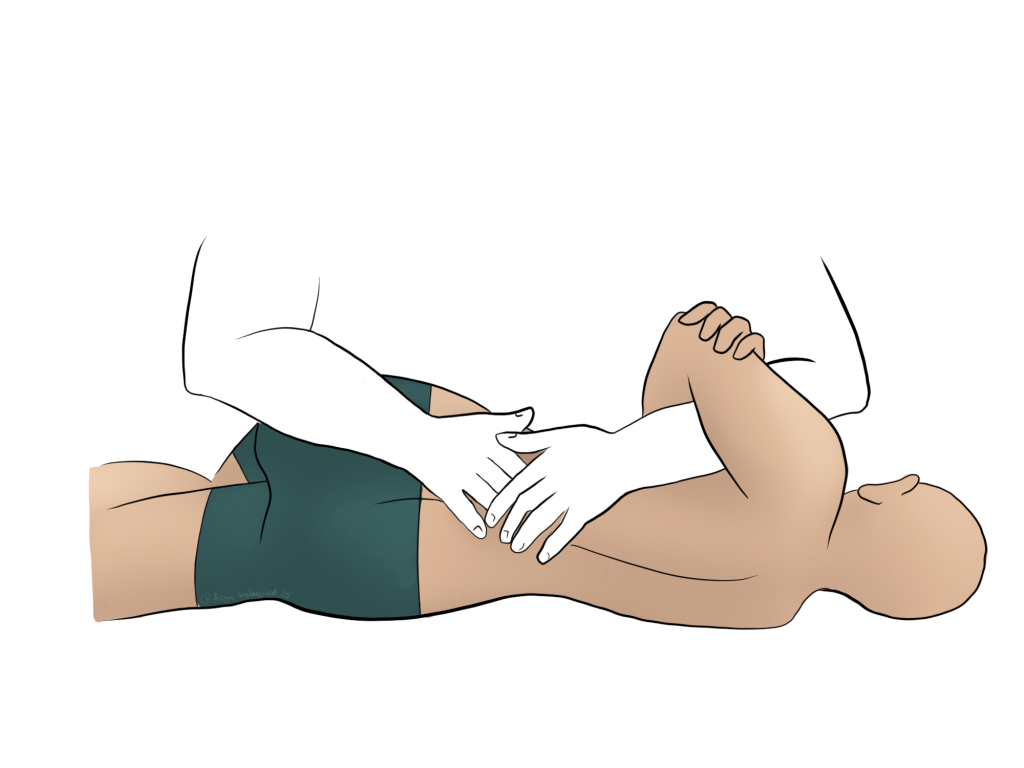
What Is a Joint Manipulation?
The technique is more formally known as a High Velocity Low Amplitude Thrust (HVLAT). Despite the long name, the principle is quite simple. A joint is moved quickly through a very small range of motion.
The goal is usually to improve movement in a stiff joint and help reduce discomfort. Osteopaths commonly use manipulations in the spine, but joints elsewhere in the body respond well too. Common peripheral joints to manipulate include the shoulders, hips, feet and hands.
Depending on the area being treated, the technique will look very different. A manipulation to the neck will not resemble one performed on the lower back, and a shoulder technique will differ again. Your osteopath will always explain what they are planning to do before treatment begins.
Why Does It Make a Clicking Sound?
The sound often surprises people, but it is usually completely normal.
Research suggests that the noise comes from changes in pressure within the joint. When the joint surfaces separate slightly, gases dissolved within the joint fluid can rapidly form a bubble. This process is thought to create the clicking sound. Interestingly, the noise itself is not what makes the treatment effective. Some manipulations produce a loud click, while others produce no sound at all. Both can achieve the same result.
This is worth remembering if you’ve watched dramatic videos online showing multiple loud cracks in quick succession. The volume of the click is not a measure of how successful the treatment has been. Some of these videos should be taken with a large pinch of salt anyway!
What Does a Manipulation Feel Like?
Most patients describe the technique as a brief, quick movement rather than something forceful. The actual thrust lasts only a fraction of a second. Many people report feeling looser or freer afterwards, particularly if the joint was noticeably stiff beforehand. Others simply notice that movement feels easier.
Responses vary from person to person. Some patients love manipulations and request them regularly. Others prefer gentler approaches. Both preferences are completely valid, and neither affects the quality of care you receive.
When Are Clicks Unsuitable?
Although manipulations are safe for most people when appropriately selected, there are situations where they may not be recommended.
Your osteopath may choose an alternative approach if you have:
- Osteoporosis or significantly reduced bone density
- Certain inflammatory conditions affecting the spine
- Some types of spinal instability
- Recent fractures or injuries
- Other medical factors that make the technique unsuitable
This is one reason why a thorough case history and assessment are so important. Before deciding on any treatment, your osteopath will consider your symptoms, medical history and examination findings.
And of course, a manipulation is inappropriate if you do not give consent. If you are uncomfortable with having a manipulation, just let us know. We have a number of other effective techniques available, including soft tissue work, stretching, articulation, mobilisation and exercise-based rehabilitation.
Book an appointment today to address your symptoms in Leicestershire or Rutland.